
Plenary Lectures
The plenary lectures will bring together leading scholars whose work has made substantial and continuing contributions to mathematics education.

Marcelo Borba (Sao Paulo State University, Brazil)
Marcelo C. Borba is a professor in the Graduate Program in Mathematics Education at São Paulo State University (UNESP), Brazil, where he coordinates the Research Group on Informatics, Other Media, and Mathematics Education (GPIMEM). He is also a professor in the Graduate Program in Teaching and Formative Processes at the same university. His research focuses on the use of digital technologies in mathematics education, videos produced by teachers and students, modeling as a pedagogical approach, ethnomathematics, and qualitative research methodology. He coordinates Trends in Mathematics Education, a book series published in Brazil that currently comprises 37 volumes. He has authored more than 100 scientific articles and authored or edited over 25 books in English, Portuguese, and Spanish. He has supervised more than 60 master's theses, doctoral dissertations, and postdoctoral research projects. From 2011 to 2023, he served as an associate editor of ZDM – Mathematics Education. From 2009 to 2022, he served on committees of Brazil's two main research funding agencies, CNPq and CAPES. He was a member of the CNPq Advisory Committee from 2009 to 2011. He has delivered keynote and plenary presentations at several major international events, including PME-44, the 44th Conference of the International Group for the Psychology of Mathematics Education, held virtually in 2020; a plenary panel at ICME-14, the 14th International Congress on Mathematical Education, held in hybrid format in China in 2021; and ICM-22, the 22nd International Congress of Mathematicians, originally scheduled to take place in Russia but held virtually in 2022. In 2024, he delivered an invited lecture on Ubiratan D'Ambrosio at ICME-15, held in Australia. He served on the scientific committee of ICMI Study 27, on Socioecological Mathematics Education, held in the Philippines in 2025, and on the scientific committee of the 2nd Annual GRIFE Conference, held in Hong Kong in 2025. In recognition of his impactful outreach and extension activities in mathematics education, he received the 2023 Dorothy Stang Award. His current research investigates videos produced by Indigenous peoples in Brazil. Beyond his academic work, Marcelo is actively involved in tree planting through reforestation projects.
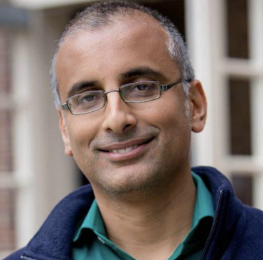
Akshay Venkatesh (The Institute for Advanced Study in Princeton, USA)
Akshay Venkatesh is Robert and Luisa Fernholz Professor in the School of Mathematics at the Institute for Advanced Study, Princeton. He received the Fields Medal in 2018 for his research joining number theory, dynamics, topology, and representation theory. He was born in India, grew up and went to college in Australia, and received his PhD from Princeton. In recent years he has studied parallels between number theory and quantum field theory. He is also interested in the history and philosophy of mathematics.(Photo: Maria O'Leary)<span style="font-size:12.0pt;line-height:115%; font-family:" times="" new="" roman",serif;times="" roman";="" "" cs"="">
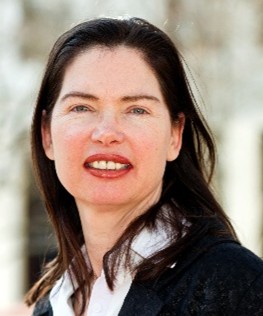
Mellony Graven (Rhodes University, Makhanda, South Africa)
Mellony Graven is the South African Numeracy Chair and Professor in Mathematics Education at Rhodes University in Makhanda, South Africa. She is also an Adjunct Professor at Griffith University, Australia. Her work focuses on research and development with teacher educators, teachers, parents and learners in primary schools. She is a past President of the Southern African Association for Research in Mathematics, Science and Technology Education; has served as a member of several international conference committees (including ICME) and as editor for multiple books and journals (including Educational Studies in Mathematics [ESM]). Active citizenship and community engagement are key drivers of her work and guide the mentoring of her large post-graduate team. Her long-term work on the Mental Starters Assessment Project with Professor Hamsa Venkat is being rolled out nationally in South African primary schools and use of the resources in pre-service teacher education in Southern African institutions is continually expanding. Her after-school “Maths Clubs” model has been taken up by NGOs across South Africa as a key intervention model to support primary mathematics learning in under-served contexts.
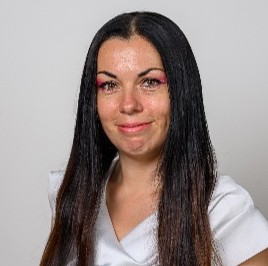
Hana Voňková (Faculty of Education, Charles University, Czech Republic)
Hana Voňková is Professor of Educational Sciences at Charles University in Prague and a fellow researcher at the Center for Economic and Social Research (CESR), University of Southern California, and the Department of Education Reform, University of Arkansas. She holds PhDs in Educational Sciences from Charles University and in Econometrics from Tilburg University, the Netherlands, and degrees in Mathematics and Mathematical Statistics and Mathematics Teaching. Her research focuses on educational measurement and the comparability of student-reported non-cognitive skills across countries and different groups of students, particularly socioeconomic groups. A major contribution of her work has been introducing and advancing methods for identifying differences in students’ reporting behaviour in educational research, including anchoring vignettes, response styles, overclaiming and response-time analysis. Her research uses international large-scale assessments such as PISA and addresses student motivation and other socioemotional characteristics, foreign language learning and teaching, and ICT skills. She has published in leading journals, including the Journal of Educational Measurement, Computers & Education and Journal of the Royal Statistical Society: Series A, and leads the Anchoring Center for Educational Research at Charles University. Her work has received several research and publication awards. She has chaired the Czech Science Foundation evaluation panel for Psychology and Education and currently serves as Vice-Chair of the national Commission for the Evaluation of Research Organizations and on the Board of the National Accreditation Bureau for Higher Education.
